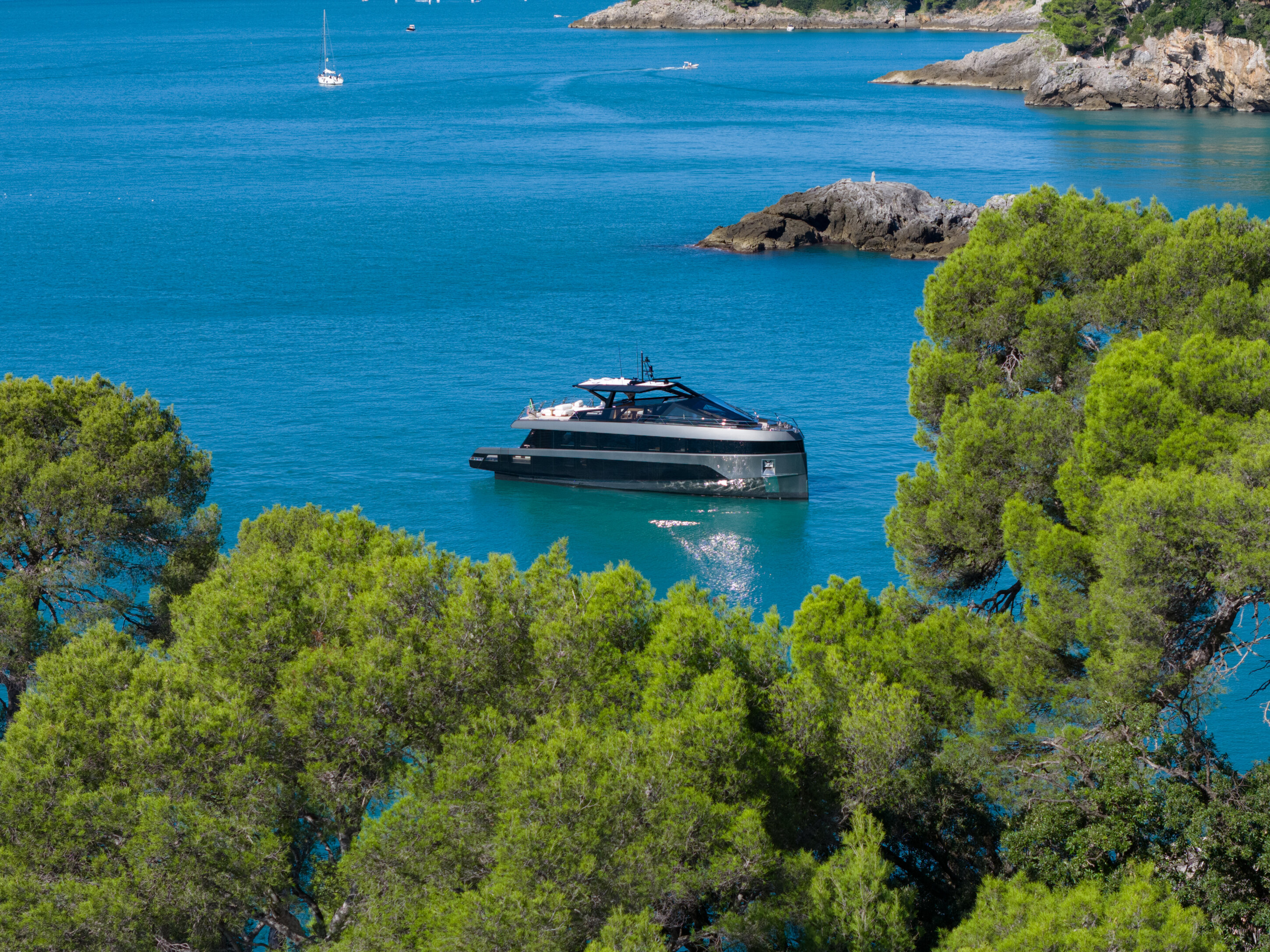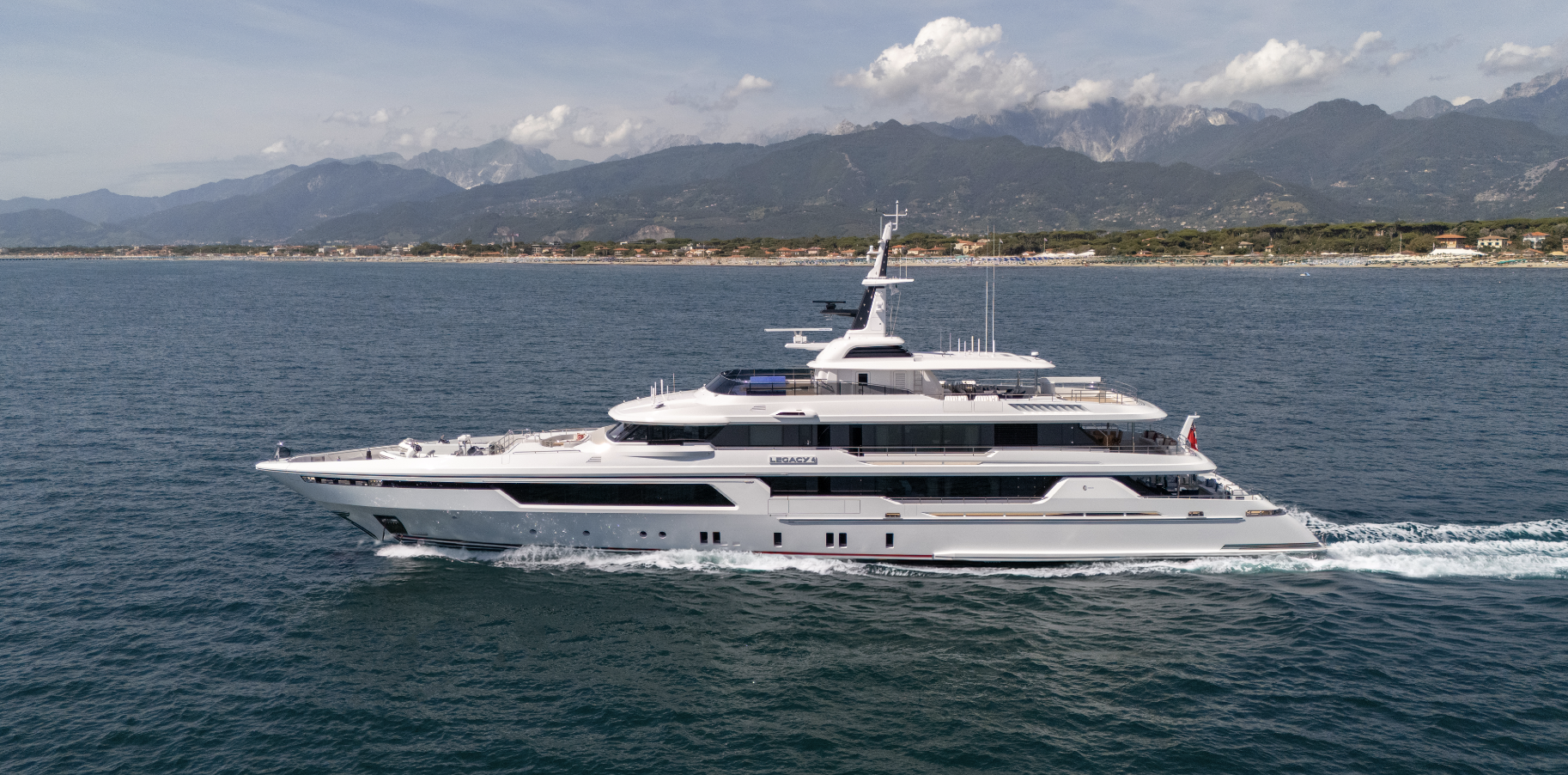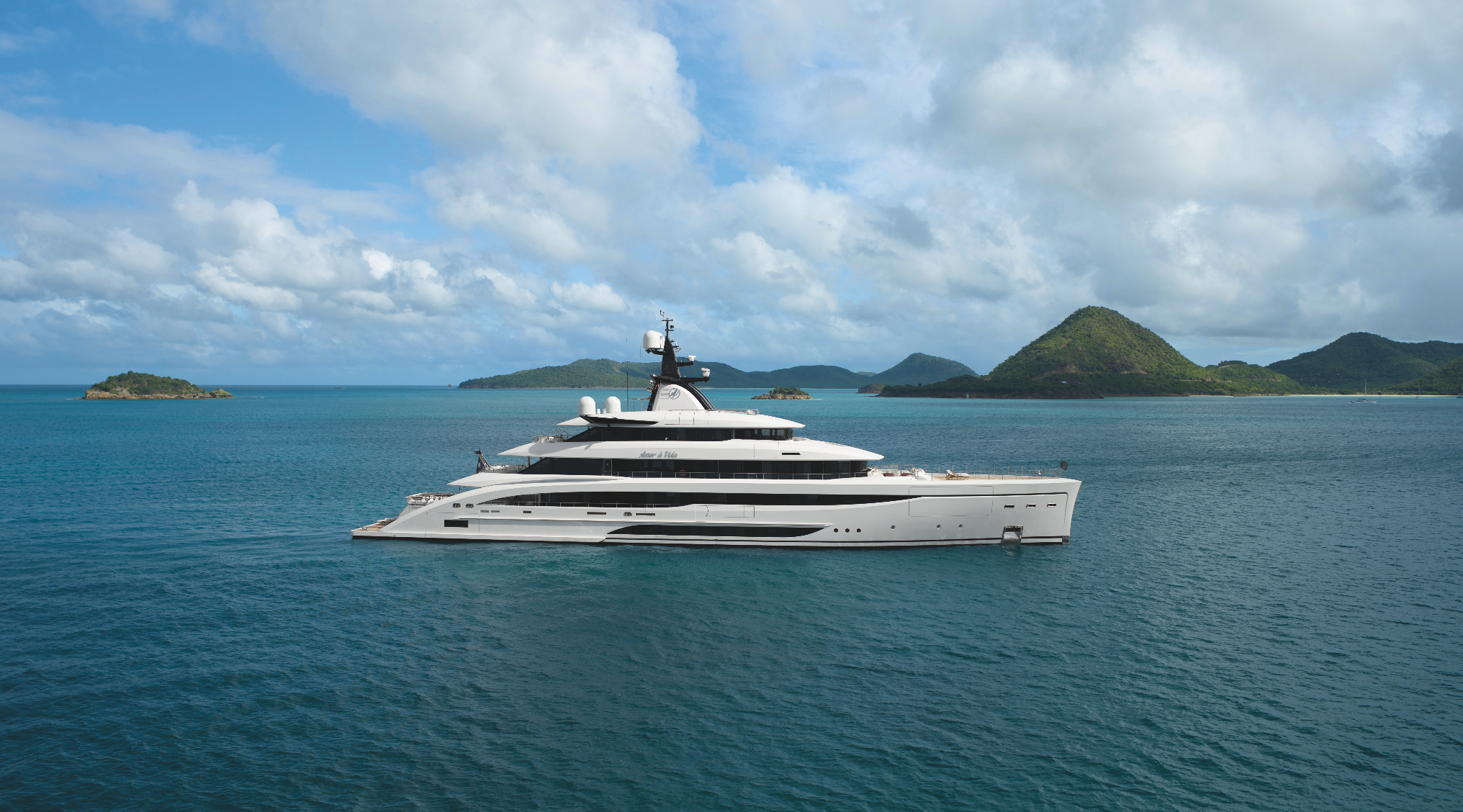
Amor à Vida was a special project, the result of collaboration with an owner we had the pleasure of getting to know: a passionate client, an experienced yachtsman, American. All elements that allowed us to work in the best possible conditions. An experienced owner, but also a very demanding one: this was not his first boat, and above all, he is someone who knows how to relate to designers. He gave us a clear list of priorities, but knowing how to listen, he let us design. The classic client you work with step by step: he accepts proposals, comments on them, but also knows where to stop, aware of the technical limits. Specifically, he was interested in creating something beautiful, not just functional, a boat that would satisfy him aesthetically. Amor à Vida is very full-bodied, with significant interior volume, yet it has its own balance, because the proportions are justified by a line, a beautiful line, and interior volume that is truly remarkable. Technology also presented us with rather demanding challenges. Amor à Vida features hybrid propulsion, which includes a battery pack to generate energy that, once stored, can be used while cruising at reduced speed. These batteries are quite bulky and must be allocated in dedicated spaces with specific safety features, between the beach club and the engine room, where the garages used to be, these are now all located forward. For us, these spaces are always of great interest: they could house a beach club, a sauna, or a gym. Giving them over to the new hybrid engine batteries means having to find other spaces for life on board.
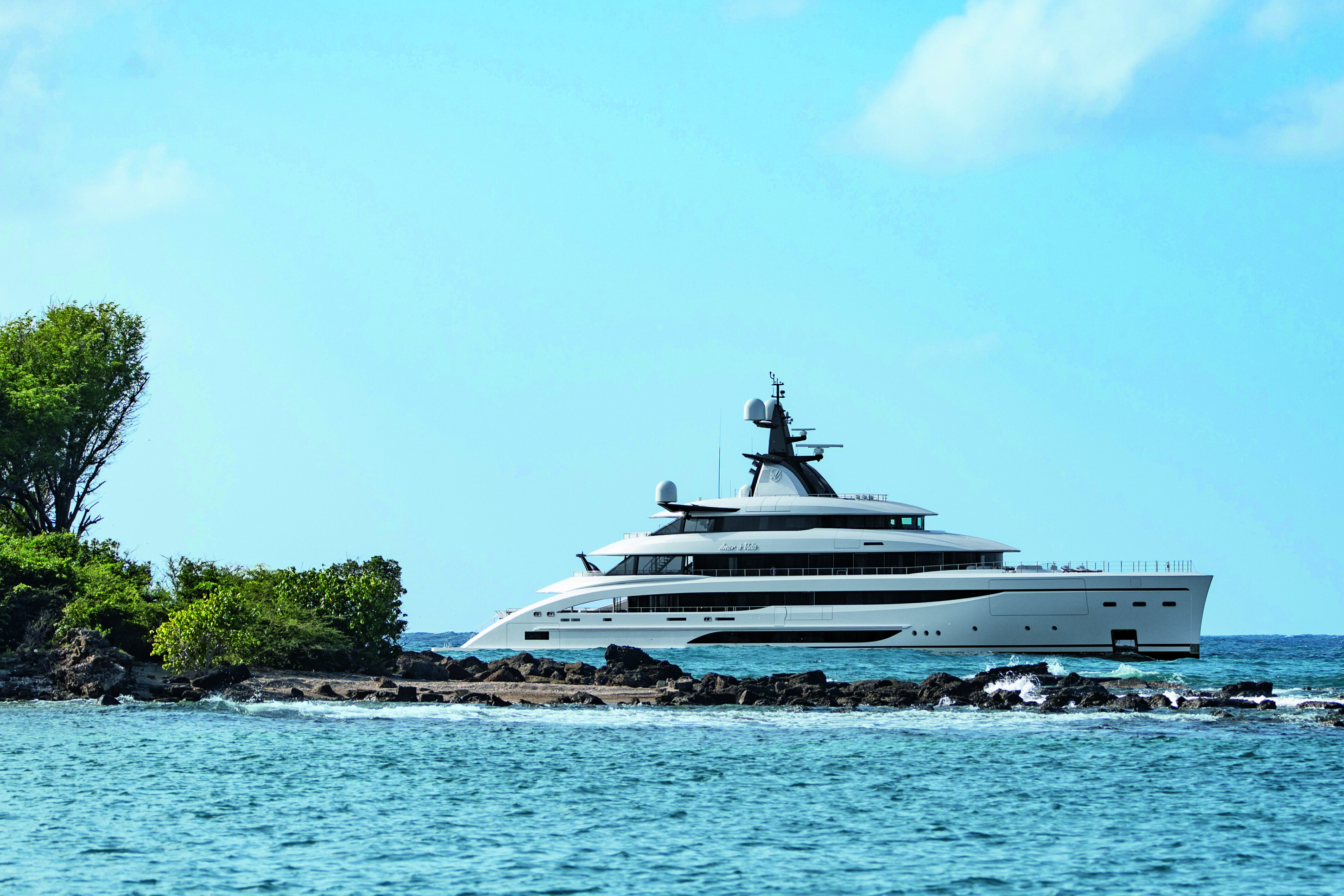
Amor à Vida nonetheless has a very classic layout. It was designed for an owner who has nothing to prove to anyone. The project can therefore focus on the true well-being of life on board, rather than solely on the need for excessive display, which, in any case, is already guaranteed by the fact of owning a maxi yacht of this size. The layout is not entirely based on conviviality, on how one intends to spend time with friends and how one intends to live aboard the boat. Let me give an example: on almost all boats, and we keep saying this and trying to avoid it, there is the classic transverse dining room placed at the back of the main deck saloon. It looks impressive, but it's used very little, even in hot season. The owner, who is an experienced yachtsman and has owned quite a few boats, in fact asked us to come up with a different proposal: on Amor à Vida, the dining area is at the entrance to the main deck, on the starboard side, balanced on the port side by a bar. It is very convivial and gets used a great deal, not least because it has the aft door and also large glazing with a French door that opens onto the side: when you open everything up in Mediterranean weather, you end up eating outside. It's also much more usable because it sits at the center of gravity between the seating areas, the external aft sofas and the sofas arranged instead in the more forward corner of the saloon. In the pursuit of well-being on board, we wanted to increase the sense of continuity between outside and inside, and the owner's cabin on the main deck, with its forward view, also guarantees great privacy for a boat of this size.
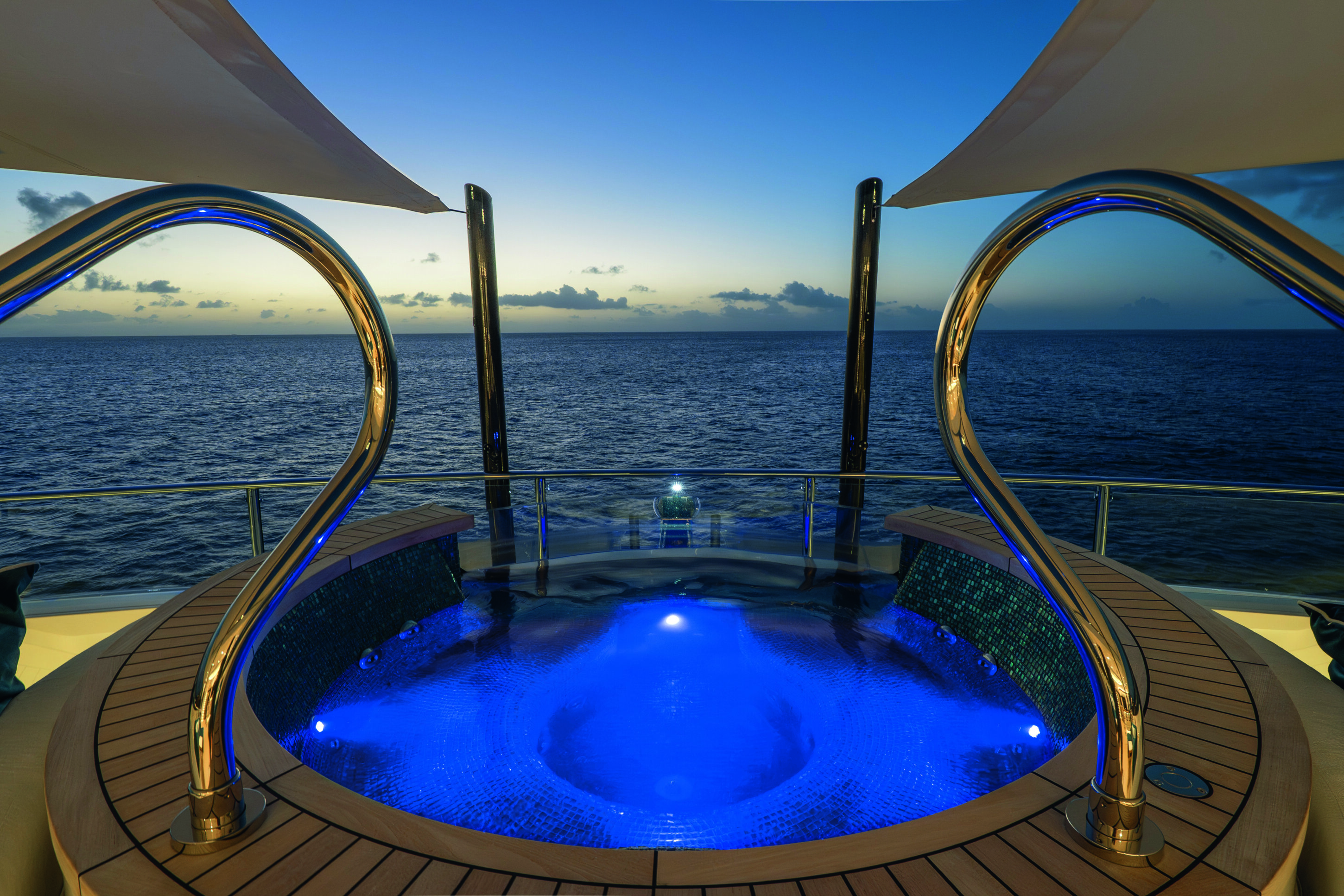
Aft, the beach club is lit by the light from the pool above: a purely aesthetic detail, with light filtered through the water that, even in the evening, produces a very spectacular and pleasant blue glow, so, in short, it serves a purpose. The interiors have nothing imposing or formal about them. In our frequent meetings, the owner asked above all for light, and so, with Valentina Zanier, who was our studio's interior art director at the time, we chose fiddleback sycamore, a very pale wood, to give the space that warmth and pleasant sense of informal comfort we had been asked for.